
COPD and Body Composition: What Your DEXA Scan Reveals About Muscle Wasting and Bone Loss in Chronic Lung Disease
Chronic obstructive pulmonary disease (COPD) affects more than 1.2 million people in the United Kingdom, yet the conversation rarely extends beyond lungs and airways. Mounting clinical evidence shows that COPD triggers a cascade of changes throughout the body, including significant losses in skeletal muscle mass and bone mineral density. These changes raise fracture risk, accelerate frailty, and worsen long-term outcomes.
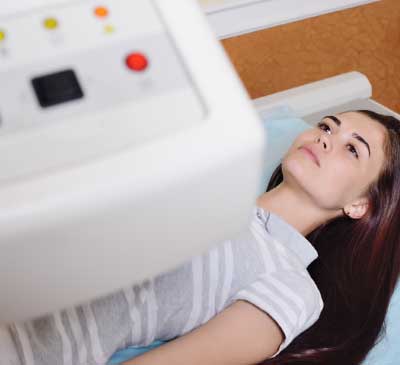
A DEXA (dual-energy X-ray absorptiometry) scan provides a detailed, region-by-region map of lean tissue, fat tissue, and bone density in a single 12-minute appointment. For people living with COPD, this information can guide targeted interventions well before a fracture or severe sarcopenia occurs. At our Harley Street clinic, we see first-hand how early body composition insight changes the trajectory for patients managing chronic lung disease.
Why COPD Affects More Than Just Your Lungs
COPD is classified as a systemic inflammatory condition, not simply a lung disease. Elevated levels of inflammatory markers such as C-reactive protein (CRP), interleukin-6 (IL-6), and tumour necrosis factor alpha (TNF-alpha) circulate throughout the bloodstream, affecting distant organs, skeletal muscle, and the skeleton itself.
This persistent low-grade inflammation is a primary driver of the extra-pulmonary complications that reduce quality of life for COPD patients. Research published in the European Respiratory Journal found that up to 35 per cent of COPD patients meet criteria for sarcopenia, while osteoporosis prevalence in COPD is two to five times higher than in age-matched controls.
The clinical challenge is that muscle wasting and bone loss in COPD develop gradually, often masked by stable body weight or overshadowed by respiratory symptoms. By the time a vertebral fracture or a dangerous loss of functional capacity occurs, the window for early intervention has narrowed considerably.
How COPD Causes Muscle Wasting
Several interconnected mechanisms drive skeletal muscle loss in COPD. Systemic inflammation activates the ubiquitin-proteasome pathway, which accelerates protein breakdown in muscle fibres. Physical inactivity compounds the problem: breathlessness limits exercise tolerance, leading to a cycle of deconditioning that further reduces lean mass.
Corticosteroid use, common in COPD management, introduces an additional risk factor. Both oral and high-dose inhaled corticosteroids can promote protein catabolism and inhibit muscle protein synthesis when used over extended periods. Nutritional deficits add another layer; many COPD patients experience appetite suppression from breathlessness during meals and increased resting energy expenditure from the work of breathing.
The result is a phenotype sometimes called the “pulmonary cachexia syndrome,” characterised by a disproportionate loss of fat-free mass. A patient may maintain a normal BMI while losing significant functional muscle tissue. This is precisely why body composition analysis is more informative than stepping on a scale.
COPD and Bone Density Loss
Osteoporosis and osteopenia are among the most underdiagnosed comorbidities in COPD. The same systemic inflammation that drives muscle wasting also disrupts bone remodelling, tipping the balance towards osteoclast-mediated bone resorption. Corticosteroid therapy accelerates this process by inhibiting osteoblast activity and impairing calcium absorption.
A 2023 meta-analysis in the journal Chest found that COPD patients have a 1.5-fold higher risk of any fracture and a 1.7-fold higher risk of vertebral fracture compared to individuals without COPD. Vertebral compression fractures are particularly dangerous in this population because they reduce thoracic cage volume, further compromising respiratory mechanics.
Smoking itself is an independent risk factor for bone density loss, and since the majority of COPD cases are attributable to long-term tobacco exposure, many patients carry a double burden of inflammatory and toxic insults to the skeleton. Vitamin D deficiency, common in COPD due to reduced outdoor activity, further compounds the problem.
What a DEXA Scan Reveals for COPD Patients
A standard DEXA scan at our clinic provides three core measurements that are directly relevant to COPD management. First, bone mineral density T-scores at the lumbar spine and femoral neck identify osteoporosis or osteopenia before a fracture occurs. Second, regional lean mass measurements quantify muscle tissue in each limb and the trunk, revealing asymmetries or overall sarcopenia. Third, fat mass distribution data show whether excess visceral adiposity coexists with muscle loss.
This combination is particularly powerful for COPD patients because it detects “sarcopenic obesity,” a condition where muscle depletion is hidden beneath stable or elevated fat mass. Sarcopenic obesity carries worse outcomes than either condition alone, including higher hospitalisation rates and reduced exercise tolerance.
Your DEXA report includes appendicular lean mass index (ALMI), calculated as the total lean mass of all four limbs divided by height squared. An ALMI below 7.0 kg/m2 in men or 5.5 kg/m2 in women meets the European Working Group on Sarcopenia in Older People (EWGSOP2) threshold for low muscle mass. Identifying this early enables targeted intervention.
Fat-Free Mass Index: A Better Measure Than BMI
Body mass index (BMI) has well-documented limitations for COPD patients. A patient with a BMI of 24 might appear within the healthy range, yet a DEXA scan could reveal critically low lean mass masked by preserved or elevated fat stores. Fat-free mass index (FFMI), derived from DEXA data, provides a far more accurate assessment of nutritional and functional status.
FFMI is calculated by dividing fat-free mass (in kilograms) by height squared (in metres). Clinical guidelines from the European Respiratory Society consider an FFMI below 16 kg/m2 in men or 15 kg/m2 in women to indicate fat-free mass depletion. Studies consistently demonstrate that low FFMI is a stronger predictor of mortality in COPD than low BMI, even after adjusting for airflow limitation severity.
Tracking FFMI over time through serial DEXA scans allows clinicians and patients to monitor whether muscle-preserving interventions are working. A six-month or annual rescan provides objective data on whether pulmonary rehabilitation, nutritional strategies, or medication adjustments are producing measurable improvements in body composition.
How to Protect Muscle and Bone With COPD
The evidence base for preserving muscle and bone in COPD centres on three pillars: structured exercise, optimised nutrition, and medication review. Pulmonary rehabilitation programmes that combine aerobic training with resistance exercise have been shown to increase lean mass by 0.5 to 1.2 kg over eight to twelve weeks, according to a systematic review in Thorax.
Nutritional support is equally critical. Adequate protein intake, generally 1.2 to 1.5 grams per kilogram of body weight daily, supports muscle protein synthesis. Vitamin D supplementation to maintain serum 25(OH)D levels above 50 nmol/L is recommended by the National Osteoporosis Society for bone protection. Calcium intake should also be assessed and supplemented if dietary sources are insufficient.
Medication review is the third pillar. Where possible, minimising systemic corticosteroid exposure reduces the catabolic burden on both muscle and bone. Bisphosphonate therapy may be considered for patients with established osteoporosis, and emerging evidence supports the role of testosterone replacement in hypogonadal men with COPD-related muscle wasting.
When to Book a DEXA Scan If You Have COPD
Clinical guidelines from NICE and the British Thoracic Society recommend bone density assessment for COPD patients who have received oral corticosteroids for three or more months, or who have additional risk factors such as low BMI, a family history of osteoporosis, or a previous fragility fracture. In practice, body composition assessment benefits any COPD patient who wants a clear baseline of their musculoskeletal health.
Early assessment is particularly valuable for patients newly diagnosed with COPD, those beginning or escalating corticosteroid therapy, patients entering pulmonary rehabilitation (where baseline lean mass data helps set measurable goals), and anyone experiencing unintentional weight loss or reduced grip strength.
At our Harley Street clinic, a full body composition DEXA scan takes approximately 12 minutes, involves minimal radiation (less than a transatlantic flight), and produces a detailed report the same day. Results are reviewed with you by a clinician who can contextualise the findings within your COPD management plan. Book your DEXA scan online or call our clinic directly.
Frequently Asked Questions
Is a DEXA scan safe for people with COPD?
Yes. DEXA uses a very low dose of radiation, comparable to a few hours of natural background exposure. The scan is painless, non-invasive, and requires no preparation. You simply lie still on the scanning table for about 12 minutes.
How often should I repeat a DEXA scan if I have COPD?
For monitoring body composition changes, an annual or biannual scan is typical. If you are starting a new exercise programme or changing medication, a follow-up scan at six months can provide useful early feedback on whether lean mass and bone density are responding.
Can COPD medication affect my DEXA results?
Corticosteroids, particularly oral prednisolone, can reduce bone density and lean mass over time. Your DEXA report will reflect these changes. Sharing the results with your respiratory team helps guide medication decisions.
What is the difference between a bone density scan and a body composition scan?
A standard bone density scan measures density at the spine and hip only. A full body composition DEXA scan also measures lean tissue, fat tissue, and visceral fat across the entire body. For COPD patients, the full body composition scan provides substantially more clinical information.
Does the NHS offer DEXA scans for COPD patients?
The NHS may offer bone density DEXA scans if you meet specific referral criteria, but waiting times can be long and full body composition analysis is rarely included. A private scan at our clinic provides same-day results with comprehensive body composition data.